Categories




Categories
The Existence of Others
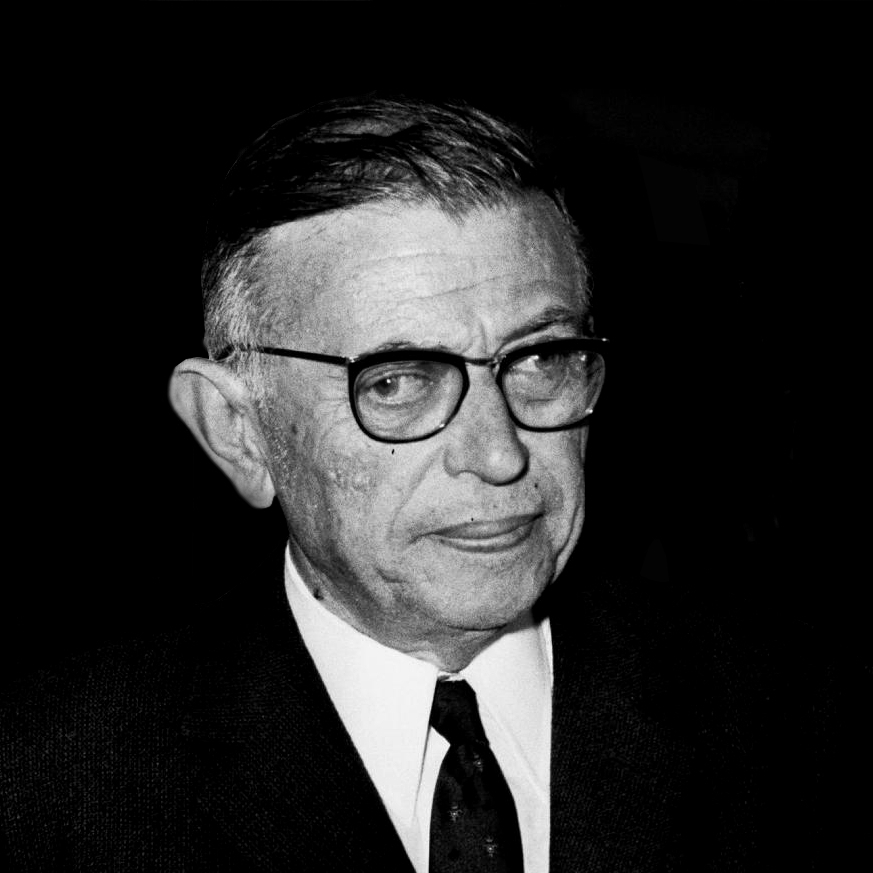
Prior to this assignment, I had heard Descartes’ expression “I think, therefore I am” numerous times without ever knowing what it meant. Funnily enough, it’s the very thought I’ve been attempting to grapple with personally.
How do you react to the plausible reality that all of this existence is imagined? The feeling at first takes the form of a wave of shock accompanied by paralyzing fear for me. I’ve spent hours and hours with a loop of these thoughts running in the background of every action. I feel that if any person decides to focus on this idea enough, they will prove its truth. Suffice to say, I wholly agree with Descartes his proposition of the cogito. In Jean-Paul Satre’s Being and Nothingness, he states, “But the other is the indispensable mediator between myself and me. I am ashamed of myself as I appear to the Other.” He attempts to explain the existence of others through this idea, yet I feel he is overlooking an integral piece of Descartes argument. We cannot confirm our sensory inout is to be trusted. Simply having thoughts may mean we are something but the thoughts themselves may hold no weight. We may be aliens or gods imagining a reality or living inside a matrix, the possible scenarios are endless. With this in mind, our thoughts as manipulated by others or their effect on us does not prove anything. All mentions of the Other proceeding this must be attached to this caveat.
Yet why do we suppose that our minds are functioning properly? The majority can agree with this idea that we can’t trust our senses because hallucinations and optical illusions exist. But why do we assume that our thoughts themselves are not faulty, that the thoughts themselves make sense? Trust in the mind over sight seems to me to be an inaccurate evaluation, as it is possible that we are collectively “dumb”.
Further, I believe shame can be said to be only an extension of punishment. Our reaction to it is a reaction to social standards as a whole and wherever their formation is rooted. When Sartre says, “Nobody can be vulgar all alone”, I find it hard to agree. He explains, “Shame is by nature recognition. I recognize that I am as the Other sees me.” I believe shame is only present when we perceive life through ideals others have created. At the core, all forms of shame can be said to be superficial. In all of my close connections I find that there is no way to shame an individual if I follow their trail of emotional reactions. In this way, we are able to compare a person against themselves rather than against their environment. The lasting concepts adopted by your environment make it possible to be vulgar while you’re alone. When you pick your nose in private, you’re still aware that it is believed to be vulgar. This awareness is proof that we always judging ourselves through what we believe our environment finds shameful. Much of the way we express ourselves and the image we cultivate in our private time is entirely dominated by how we expect to be treated. The key difference between this and Sartre’s assertion is that these are our expectations, they are not the truth. If you are unaware that others find an action shameful, you will not shame yourself. All this said, I find that we are as we see ourselves and often times we see ourselves as we think others see us. If we really knew the snap judgments made about us we would probably go mad. This in mind, I find that transcendence of shame entirely leads to the more accurate question of intent. Those that have not ruminated on their own ideals are by default projecting their contemporaries views or views from the past. I believe that if we were to ask ourselves what the intent of our beliefs or appearance are suggesting, we would move towards a happier existence. Detachment from this idea of shame also leads to the detachment of our concept of self. We are not locked to any idea we agree with, we are the intent behind them. Our creations are not attached to us and from moment to moment, we must reevaluate our intent. Through this way of thinking, we are attempting to view one another as what they are in the moment and never as they may be labelled. ( As I’m writing this I’m thinking this might all be exactly what Sartre was saying. )
I think it’s possible that many of us are conflating our fear of punishment with the shame we experience. While shame may not be what we think it is, the punishments that are associated with it definitely are. With the ability we have today to refine our image and the immediacy with which information travels, our private actions have great potential to impact our wellbeing. When we apply this idea to political or philosophical concepts, I begin to question how much this has restricted our thoughts. This is in stark contrast of Sartre’s assertion that shame is recognition of how the Other sees you. Following this line of thought, our discussion changes drastically. The same fear can possibly be applied to the interactions we face on a daily basis. For example, as a man today, you are far more likely to be able to overpower a woman physically. When approaching a woman, most men don’t take this into account, especially if they believe they’re acting from a place of kindness. In my experience, when men that are clearly physically superior have hit on me, I immediately feel the need to carefully watch my words. This is, of course, anecdotal and an inaccurate comparison but it makes me wonder how I much differently I would think if this were the dynamic the majority of the time. I imagine that variations in experience which seriously alter the potential risk would have drastic reverberations in our ideals. Undoubtedly, physicality will always play some kind of role in our lives but we cannot allow it to blind us to the humanity of an individual. Applying this to our experience as a whole, I don’t think we can form a true evaluation of the Other if we infuse every idea with our fear.
(1059 words)
Categories
Friederich Nietzsche
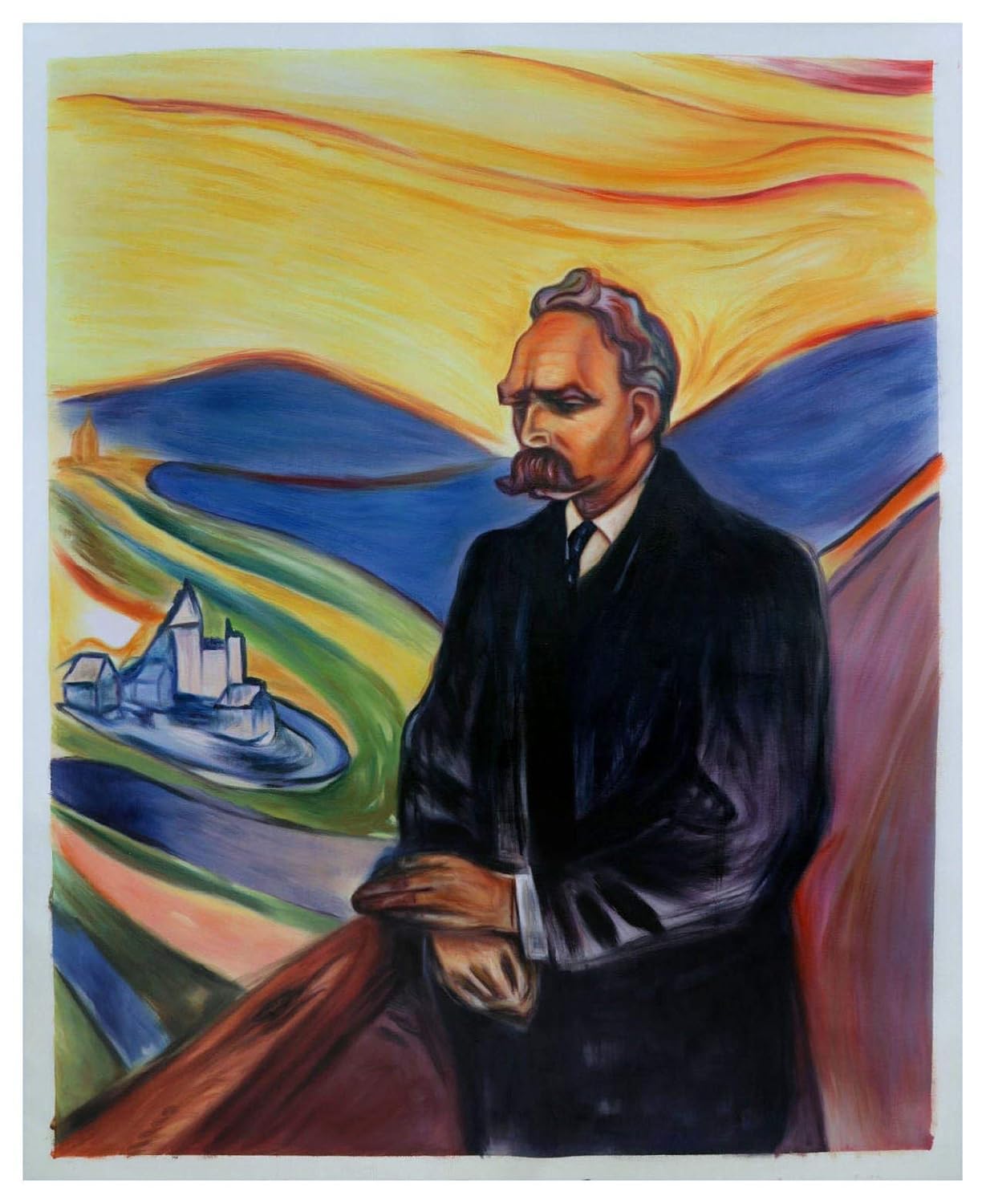
To me, the knowledge that can be gained from Nietzsche’s ideas comes mostly from where his contradictions of himself lie. A huge piece of these contradictions are brought forth from his standing as either a nihilist or anti-nihilist. This is not a contradiction that only lies within his Nietzsche’s created parameters, I believe these to be some of the inescapable contradictions of reality and those which forever allow us room to cry foul with regards to any set of guidelines. This may be demonstrated through his description of the Apollonian and Dionysian dichotomy and what I view as it’s impossible application. In The Birth of Tragedy, Nietzsche touches on his description of these lifestyles saying, “Thus far we have considered the Apollonian and its antithesis, the Dionysian, as artistic energies which burst forth from nature herself, without the mediation of the human artist; energies in which nature’s art impulses are satisfied in the most immediate and direct way: first, on the one hand, in the pictorial world of dreams, whose completeness is not dependent upon the intellectual attitude or the artistic culture of any single being; and, on the other hand, as drunken reality, which likewise does not heed the single unit, but even seeks to destroy the individual and redeem him by a mystic feeling of Oneness.” Here, Nietzsche defines the Apollonian ideology as a cerebral experience, one of a dream like existence, whereas the Dionysian life is a drunken reality where the individual is only a part of the whole. Now, I’m not disputing Nietzsche’s stance on this directly but rather using these constraints as a method of exemplifying the contradictions in our reality. For instance, if we urge a society towards a chaotic system, this remains a type of order and could be said to fall under the Apollonian perspective, continuing in this loop forever. In the same way, our life is filled with these inconsistencies to which there is no end. Here is why I believe Nietzsche has such trouble with self-conflict, life is contradiction on a universal and individual level. I also believe that this is an integral part of the absurd that Camus uses in his writings.
In Human, All Too Human, Nietzsche says,”At first single actions are termed good or bad without any reference to their motive, but solely because of the utilitarian or prejudicial consequences they have for the community. In time, however, the origin of these designations is forgotten [but] it is imagined[75] that action in itself, without reference to its consequences, contains the property “good” or “bad”: with the same error according to which language designates the stone itself as hard[ness] the tree itself as green[ness]—for the reason, therefore, that what is a consequence is comprehended as a cause.” I love this quote for how it shows our attachment to language and it’s communication of what we have forgotten. Aside from the contradictions mentioned previously, language also cannot preach to the experience, regardless of how many words we use. We have lost our connection to meaning, compared to times preceded when good or bad could be quantified by the actual disadvantages yielded by behavior. Today, the systems we are a part of are impossible to pay attention to, thus leaving the question of the value of our actions unanswerable. This is what I think has led us to our incessant need as a culture to deconstruct concepts and moral stances. You could also make the point that even if we could monitor the impact of our actions in this lifetime, we cannot beyond our death, making the implementation of consequentialism at any stage pointless. This is all to say that it is beyond even language to attempt to explain nihilism or anti-nihilism and that Nietzsche may be both at once when the border is impossible to define.
638 words
Categories
Double Indemnity

Before entering into an evaluation of the characters in Double Indemnity, I think I need to preface the discussion with an explanation on my perspective towards morality in my own words and with minimal knowledge of preexisting philosophical concepts. I believe that we each create our own ideals and in turn, invent our own idea of morality. From what I have read about nihilism, this seems to be a primary tenet. Although typically I see nihilism broadcast as a negative philosophy, I see this as total freedom which also can lead to the most beneficial outcome possible, assuming we’re using the zeitgeist of today to dictate our idea of morality. It is also very plausible for this to segue into anarchy, however it could just as easily transition into any other style of thought. Simply put, I believe that the dissolution of morality by way of nihilism allows for true freedom, encompassing every possible point on our moral spectrum.
Taking this into account, it becomes very difficult for me to boil it down to one reason that Phyllis and Walter are dissatisfied. Maybe these two characters came to a nihilistic conclusion of sorts and figured that any route has just as little moral significance as the next. If Walter is believed to have an accurate idea of his own motivations, then we can trust him when we says, “Yes, I killed him. I killed him for money – and a woman – and I didn’t get the money and I didn’t get the woman. Pretty, isn’t it?” However, deceit is a central theme of the film so that may not be the most valid assumption. A case could be made for boredom being a strong motivator for Walter killing Mr. Dietrichson as well. Walter appears to have a fairly easy life, pleasant living conditions, money to spare, and good looks, so why even choose a path that involves murder? Then again, our knowledge of Neff’s past is insufficient to exempt him from the possibility that he is clouded by trauma. This brings me to another problem with assuming that morality is objective, it assumes that the immoral are conscious and not misunderstood. We can use Phyllis as an example of these opposing outlooks. One could look at her actions and immediately declare her an awful person, worthy of nothing more than time in prison. Though this denies her any ability to change and destroys any opportunity she possessed to be productive to society. If we look into her personal reality, then we begin to unravel what reasoning led to those actions and the notions that brought us the decisions that the majority regard as immoral. Forming a rigid definition of morality makes it impossible to predict behavior, forever blind to the root cause. Perhaps Phyllis was responding to the traditional subservient matriarchal role she was expected to conform to. Having those ideals hammered in led to her using her sexuality to gain control over her own life. Phyllis may have reasoned that if men will only view her as sexual fulfillment then she may as well view men as a means for financial fulfillment.
Fate is another reoccurring theme in this film and we are made aware very quickly that there will be no escaping what waits for us. Walter confessing in the opening scene and his narration throughout heighten the feelings of claustrophobia, further stressing the looming judgment awaiting our characters. Keyes himself could be seen as a personification of fate, especially when we remember the “little man” that presides within him. “Listen, Walter. I’ve been living with this little man for twenty-six years. He’s never failed me yet. There’s got to be something wrong.” There is no escaping what is to come.
625 words
Categories
The Myth of Sisyphus
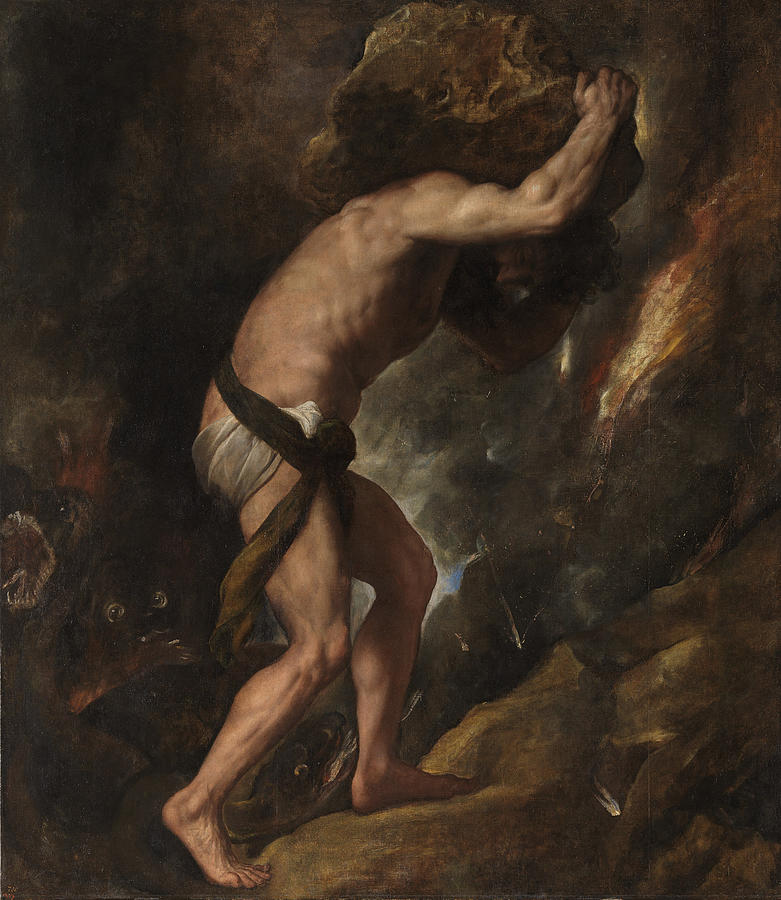
Is Sisyphus happy? I believe that what I discern to be his mental and emotional state are irrelevant, any analysis would only be a reflection of my ideals. I say this not to avoid assertion of my own opinion but to highlight how limited I am by my own experiences, how uneducated we all are forced to remain. Camus states, “I am interested … not so much in absurd discoveries as in their consequences.” Here is where I find his analysis of The Myth of Sisyphus to fall flat. This dismissal of any need to explore the true content and possibilities within the absurd feels like a reductive approach to reality. My responses to these questions must be influenced by this observation, it appears to me to be all encompassing and applicable to any stated perspective (including every word I type). That quote may serve as reasoning to restrict our conversation to the matter of life and death, yet I don’t feel that this conversation is possible without recognition of the validity all of our viewpoints hold.
Within the absurdity exists an explanation for every behavior and every opportunity for our notion of death to be disproved. “That universal reason, practical or ethical, that determinism, those categories that explain everything are enough to make a decent man laugh.” Camus professes to be detached from such rigid and rational thought, however his idea of death is exactly that. By becoming aware of the absurd, we forfeit our ability to speak with assuredness considering that the absurd has the potential to contradict our every belief. This could be analogized through the expression “the only constant is change”, for this to be true it must also be possible that this expression can change to be false. Following this reasoning it becomes easy to observe how any comprehension of the state we find ourselves in may be deemed legitimate or illegitimate by way of another. I would like to say Sisyphus is happy but I only feel comfortable in saying I’d like to hear what he would have to say.
The matter of life or suicide feels just as justifiable from both sides in my mind. As stated previously, the majority of our behavior throughout time and Camus’ ideals are heavily dependent on the conclusion that life and death are what we expect them to be. Who is to definitively say that death is not the answer to all of our questions? I may be leaning too heavily toward the Jim Jones lifestyle here but it feels irresponsible to discredit any part of what has happened across time. Suicide is a gamble just as a life of pain is.
I see possibility for further contradictions in Camus’ opposition of rational knowledge while harboring such resentment for suicide as well. If Camus truly believes suicide to be such a decisive end to what we know, wouldn’t exploring methods to circumvent death be a worthy pursuit? Science and rational thought are surely logical fields to explore if there’s a chance for us to cheat death. While finding a way to avoid death may not bring any greater understanding of this existence, it could provide more acute answers to the question of whether or not the struggle itself is enough.
On a personal level, I generally have been seeing myself as my rock. Prior to recently I would separate perception from what is included in my realm of control. Currently, I’m attempting to cultivate command over ideas that are more commonly held as concrete and realizing how many painful experiences may be altered to become positive. Alan Watts said, “The worst part of torture is the beginning, where of course you’re full of all your illusions and all your fears about black and white and the terror that black may win. But it’s said that as torture proceeds, it slowly changed the state of mind of the victim to a kind of drunken masochistic giving in to the torture, so that it becomes something that he cooperates with. In other words, there is a point at which pain becomes an experience without having a negative interpretation put upon it.” All said, I hope to transmute myself into the rock or vice versa. The struggle is enough right now.
712 words
Categories
ABOUT ME
On November 28th, 1999, I was born into a very religious family of Jehovah’s Witnesses. As early as I can remember, I felt a strong opposition to way this limited my thoughts. However, I do feel thankful for the structure and community I experienced because of it. Looking back, I think this upbringing might be the reason I have so many ontological questions today. My opposition of religion typically manifested in inquires regarding abstract qualities associated with belief in a god. As a teenager, I started bringing these questions up to the heads of the congregation. Some didn’t take my questions seriously, most likely because of my age. Yet others did take the time to address my qualms, forcing me to define these concepts for myself. Later on I started gaining more interest in philosophy and realized that a lot of these questions were ones that have been discussed for thousands of years.
In high school I started making friends that shared an interest in art, music and skating. That being said, most of the friends I made were not Jehovah’s Witnesses and this presented a huge obstacle. Jehovah’s Witnesses frown on association with those that aren’t a part of the religion which meant I had to sneak around if I wanted to see them. While this was a difficult period, I knew it was going to come sooner or later if I wanted to be able to freely express myself. If a person is baptized as a Jehovah’s Witness and their actions lead to them being “disfellowshipped”, other Jehovah’s Witnesses can be punished for associating with them. Those that are disfellowshipped are generally ostracized and its not uncommon for parents to kick their children out of the house after they’re disfellowshipped. Thankfully, I had never been baptized but most of the people I had grown up with my whole life would still stop associating with me if I wasn’t practicing. After many nights of argument and discussion, my family grew to understand my perspective. Fortunately, they still accepted me and I’m grateful for the relationship we have now.
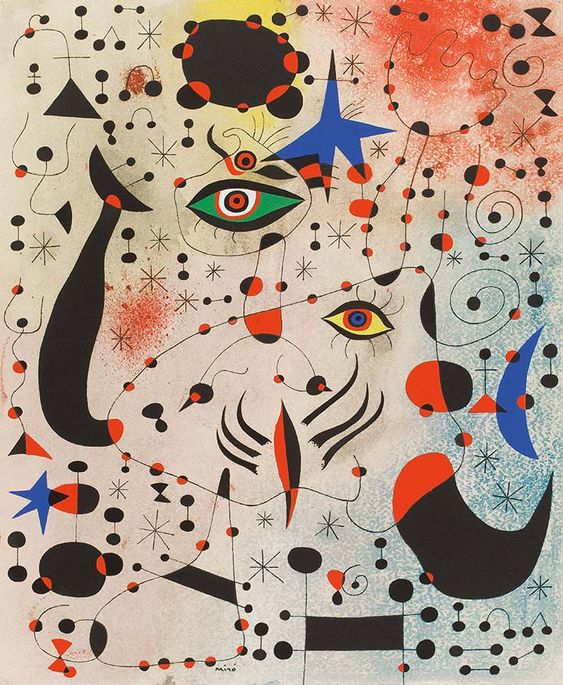
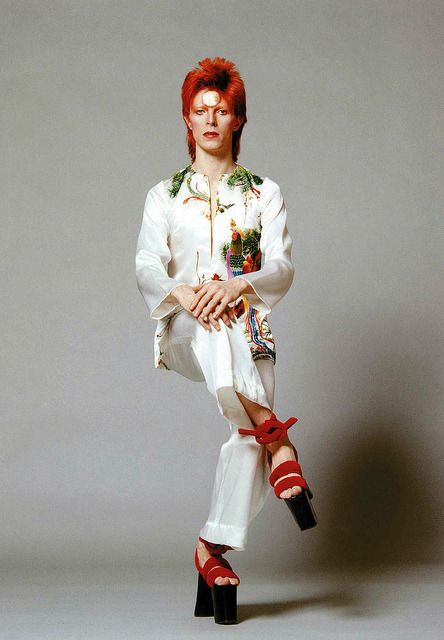
From around the ages of nine to fourteen, I took piano lessons on and off. I wasn’t a good student and never practiced but somehow the basics still stuck with me. I feel a strong connection to the instrument now and playing is deeply meditative for me. While I’ve always enjoyed music, middle school is when I started expanding my taste. Bands like Crystal Castles, Daft Punk, and David Bowie were among the artists that lead me to a deeper appreciation of experimentation in music. The ability they had to express themselves in an infinite amount of ways is a constant inspiration. Those friends I made in high school educated me in the production and recording side of music. This allowed me to apply what minimal knowledge I had of piano and see the potential it had beyond it’s acoustic capabilities. During this time, the two main bands my friends played in were Pierce and the Gals and Rosemother. Attending their shows allowed me to connect with the Sacramento community and experience more independence. If I was around while they practiced, I always found myself gravitating towards the drums. Listening to Zach Hill’s solo work and his music with Death Grips furthered my interest in drumming. This lead to me buying a shitty drum kit and teaching myself how to play. The gut feelings I was able to express through drumming completely contrasted the experience piano provided but was equally as meditative for me. Nowadays I’m learning how to produce music myself. Mostly electronic and ambient stuff but I hope to form a punk band after quarantine ends. Some artists I’m listening to right now are Oneohtrix Point Never, Discharge, Christian Death, Andy Stott, Grimes, Igor Stravinsky, Bauhaus, The I.L.Y’s, Part Time, and Fugazi.
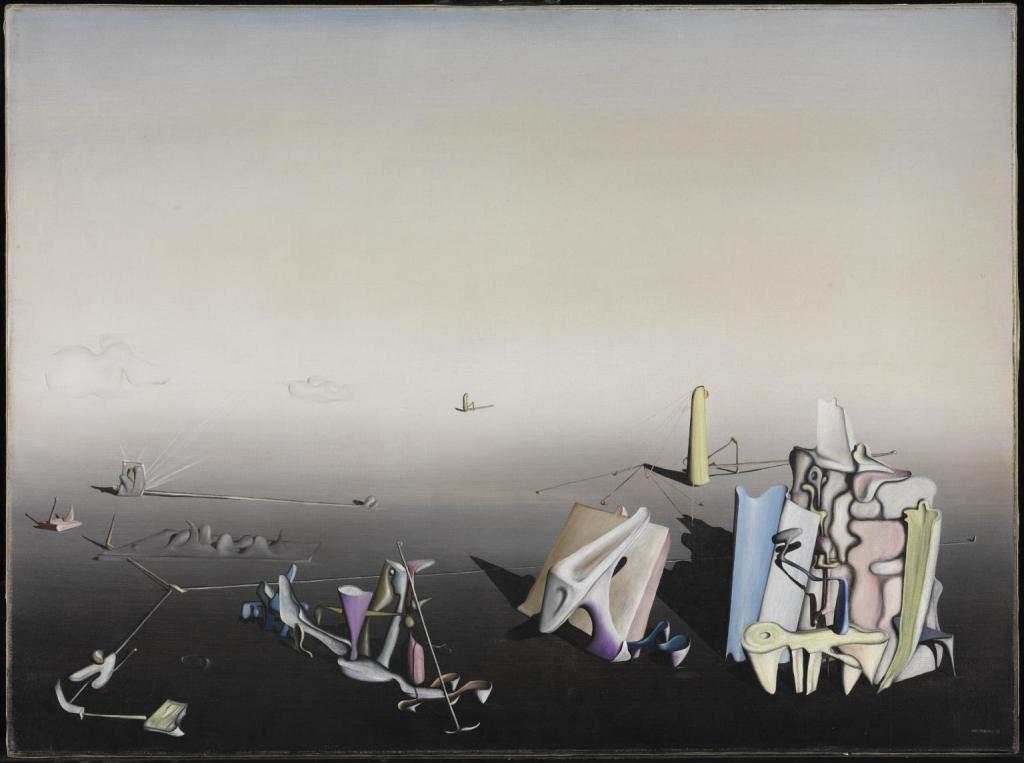
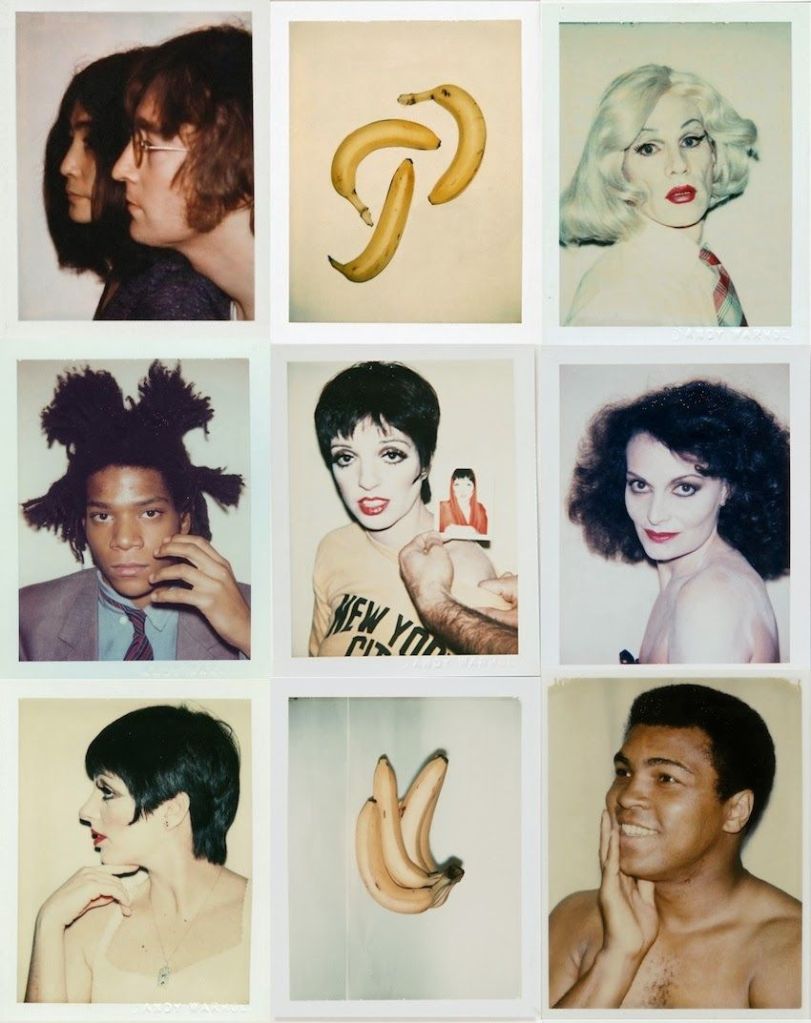
In 2016, I started an internship at Verge Center for the Arts. During my time here, I learned about installation art and guided children in art projects. I started exploring the world of visual art more and more and fell in love with the possibilities. Felix Gonzales-Torres, David Hammons, and Robert Gober were among the artists that opened me up to this format of expression. Around the same time, my high school art teacher provided me guidance on how to improve my own art. Charcoal, acrylic, and graphite are my favorite mediums to use but have a long ways to go until I’m happy with the work I’m making. My initial encounters with visual art started when on GIMP, an open source version of photoshop. I’m still very fond of graphic design and making album covers for friends has showed me the possibilities of the medium. I hope to combine painting or drawing with graphic design elements in the future. Visual artists that I enjoy are Jean-Michel Basquiat, Anna Park, Ed Fornieles, Anna Park, Ren Hang, Frederick Kunath, Yves Tanguy, Hieronymus Bosch, and M.C. Escher.
I’m not really sure where I’m going now. I enrolled in some classes thinking I wanted to transfer to some kinds of art school, maybe pursue a degree in fine arts but my plans are always changing. I’m not great at sticking to something if I’m not genuinely excited about it. This makes me hesitant to set out on a course that requires so much work towards classes I’m not excited about. The only thing I’m sure of now is that art will always be a part of my life in one way or another.
(928 words)



 flaccidmoney.finance.blog